Tinnitus is the perception of sound when no external source is producing it. People often describe the experience as ringing, buzzing, humming, hissing, or another persistent sound. For some it is occasional; for others it can interfere with sleep, concentration, and everyday comfort.
Tinnitus itself is generally considered a symptom rather than a single disease. It can be associated with hearing changes, exposure to loud sounds, ear conditions, certain medications, and other health factors. That is one reason why a proper evaluation matters when symptoms persist.
The sound, intensity, frequency, and effect on daily life can differ substantially from person to person.
Hearing changes, noise exposure, medications, and other factors may contribute.
The most appropriate approach depends on the person and the factors involved.
There is no universal “instant fix” for tinnitus. Evidence-based care focuses on identifying possible contributing factors, treating conditions that can be addressed, and reducing the impact tinnitus has on everyday life.
Why can tinnitus feel so different from one person to another?
The auditory system is complex, and tinnitus can arise in different circumstances. The way the brain processes sound and attention may also influence how noticeable or disruptive the sensation becomes.
Hearing changes
Age-related hearing changes and other forms of hearing loss are commonly associated with tinnitus.
Noise exposure
Repeated or intense exposure to loud noise can affect hearing and may be associated with tinnitus symptoms.
Health and medication factors
Ear conditions, certain medications, and some health conditions can also contribute in individual cases.
Sleep and stress
Poor sleep and stress do not necessarily cause tinnitus, but they can make the sensation more noticeable or difficult to manage.
A closer look at tinnitus and what current research suggests
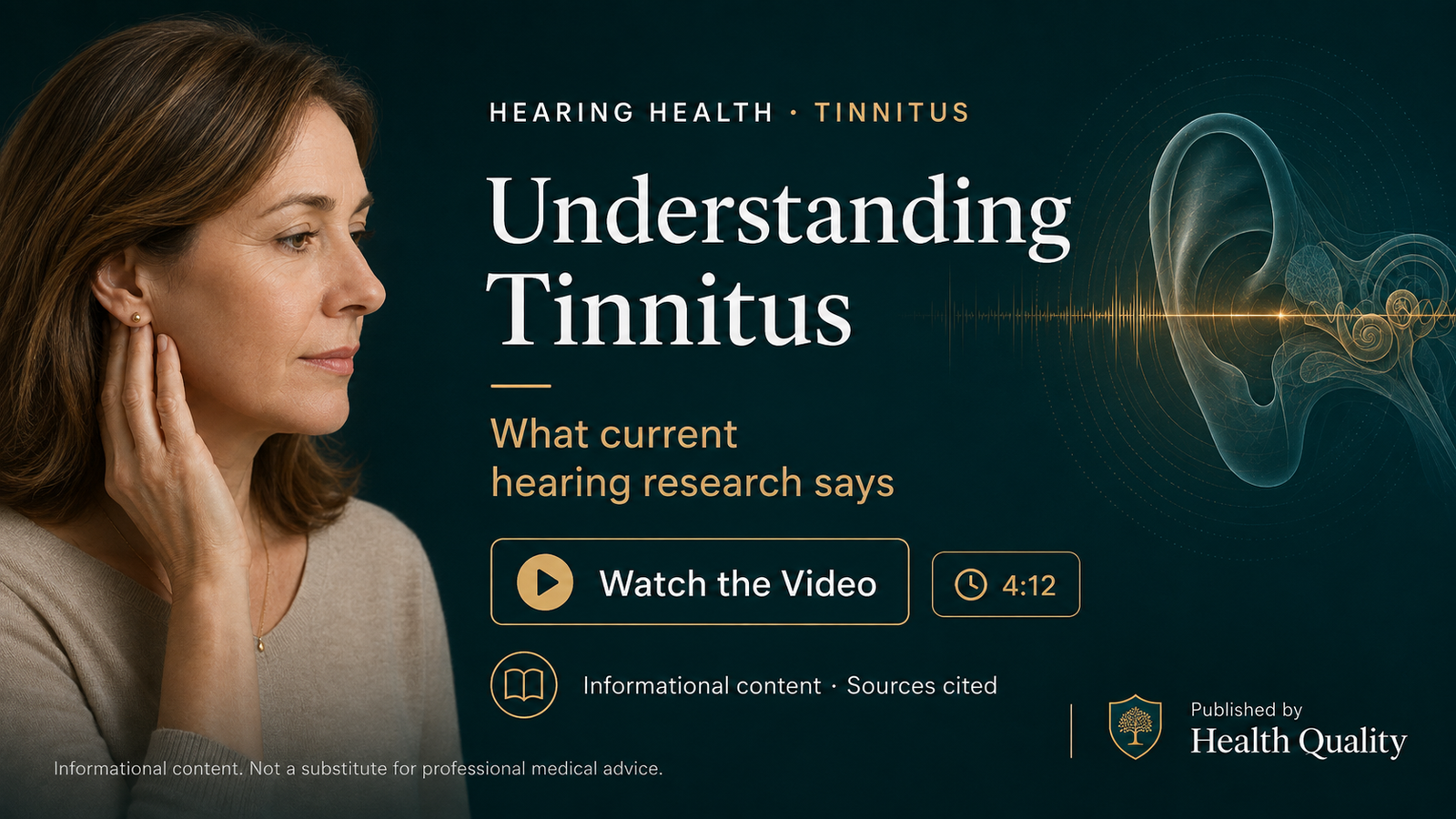
This short educational presentation explores commonly discussed tinnitus factors and practical considerations for people who want to better understand their symptoms.
What kinds of approaches are commonly discussed?
Depending on the cause and how tinnitus affects a person's daily life, healthcare professionals may discuss hearing evaluation, treatment of contributing conditions, hearing devices when appropriate, sound-based strategies, sleep habits, stress management, and cognitive or behavioral approaches.
Because tinnitus can have different causes, an approach that helps one person may not be appropriate for another.
Seek medical evaluation if tinnitus begins suddenly, affects only one ear, occurs with sudden hearing loss, dizziness, significant ear pain, or other new or concerning symptoms.
Want to understand tinnitus in more detail?
Watch the full educational presentation for a straightforward overview of tinnitus, contributing factors, and commonly discussed management strategies.
▶ Watch the Full ExplanationScientific & Clinical References
- National Institute on Deafness and Other Communication Disorders (NIDCD). Tinnitus.
- American Academy of Otolaryngology–Head and Neck Surgery. Clinical Practice Guideline: Tinnitus.
- Cochrane Review. Cognitive behavioural therapy for tinnitus.
This article is provided for informational and educational purposes only and does not replace diagnosis, medical evaluation, or treatment by a qualified healthcare professional.